
The Bible is God’s Word; it is God’s love letter written to His people and to those who sincerely want to enter into a relationship with Him. The Bible is a library, a collection of books. It is not merely a book to inform us; it is a book meant to transform us. It is the most widely read book in the entire world. It has been proven more historically accurate and impacted more nations and empires than any other book in history.
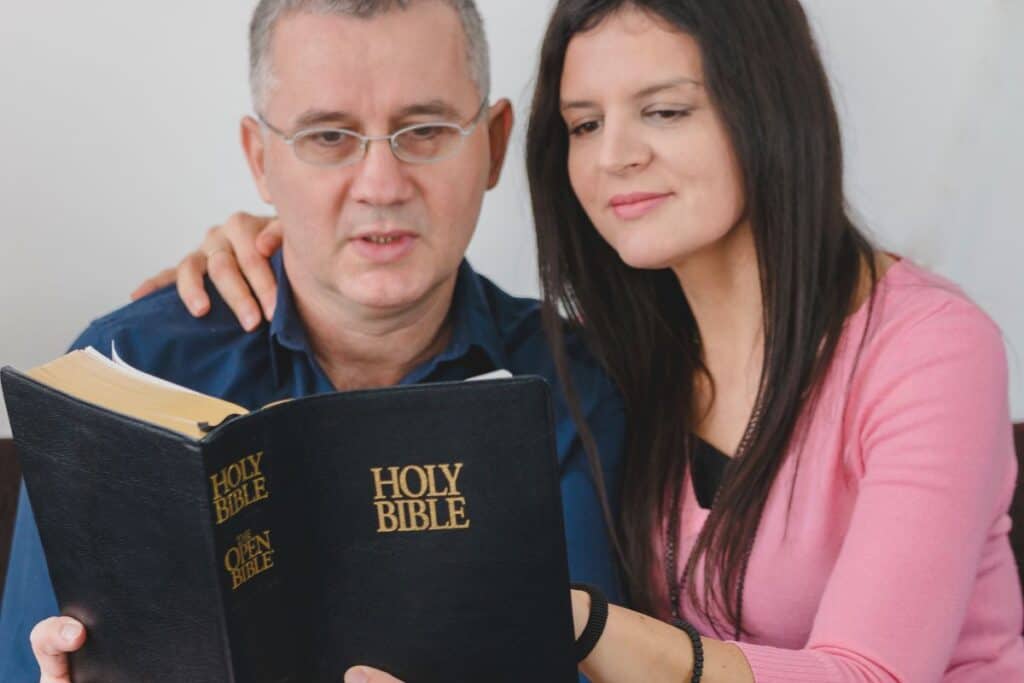
What Is The Bible Exactly And What Is The Purpose?
The Holy Bible contains 66 books, 39 in the Old Testament and 27 in the New Testament. These books were composed and compiled over 1000 years by 40 authors on 3 different continents.
The Old Testament, comprising the sacred scriptures of the Jewish faith, is reckoned to have been written between around 1400-400 BC* and was written in Hebrew apart from a few portions (notably in Daniel and Ezra) that were written in Aramaic. The New Testament was originally written in Greek.

The majority of biblical history and prophecy points to Jesus. The Old Testament books contain the story of God and his people before the coming of the Messiah – Jesus. The New Testament starts with the birth of Jesus. And yet the Bible remains as contemporary today as it was when God wrote the Ten Commandments on stone tablets and gave them to Moses.
Reading the Bible is one of the best ways to get to know God and his word. It is not organised in chronological order but is an anthology – a compilation of different genres including history, prophecy, songs, poetry, historical accounts, personal letters, proverbs, genealogies, symbolic stories and fictional stories (e.g. the parables).
The Bible tells us one unified amazing story and has a unifying theme which is to reveal God to us. It offers us freedom, healing and hope. But it can be an intimidating read and the most challenging part can be simply to get started. If you want to start reading the Bible, you have to be intentional in getting God’s word into your thoughts and mind. Where you start depends on your personal goals. An important aspect of studying the Bible is to start with prayer.
If you are new to prayer don’t worry; even Jesus’ disciples who spent time with him every day, asked him if he could teach them to pray (Luke 11:1-4). Ask God to help you understand His word and what it is you need to learn from it. As you read, take time and pace yourself. God has promised that “you will seek me and find me if you seek me with all your heart.” (Jeremiah 29:13).
Additionally, Saint Jerome said, “We cannot come to an understanding of Scripture without the help of the Holy Spirit who inspired it”. And to further help to understand, follow along and find the various places in the books of the Bible, they have been broken down into chapters and verses. They were never written with chapters and verses but these have been added in order to help us find our way around the Bible.
Which Bible should I Choose And What Steps Would Be Helpful?
Starting to read the Bible begins with some basic steps. First, you have to choose a Bible and which version. You can get a hard copy which over time becomes very personal to you, or you can choose an app and various study tools online. There are many translations on the market of the Bible. Broadly speaking, the translations fall into three categories: the formal equivalence (meaning word-for-word translation) and the dynamic equivalence (meaning thought-for-thought translation); and the paraphrase, which is a rather looser translation. One of the most common translations is The New International Version.
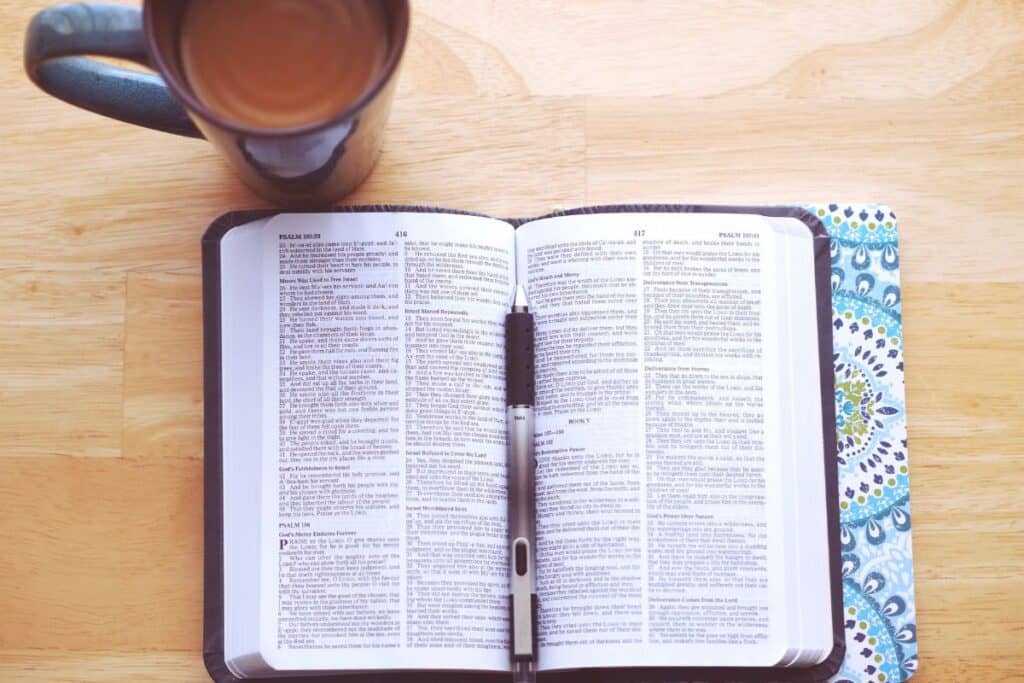
It is a popular version which is generally regarded to be a dynamic equivalence: like many translations, it is focused on balancing literal translation and readability. Another few recommended translations to start with are the CSB (Christian Standard Bible) and the NLT (New Living Translation). CSB emphasises the importance of being both literal and readable and is focused on clarity, which makes it more suitable for daily reading and Bible study and thus gives a better understanding of the message. The NLT is one of the easiest Bible translations to read. It focuses more on the thought behind the text, rather than the exact words used in the transcript.
Regardless of which translation you use, you can be sure that Scripture itself remains the same across the different translations. The original word might be translated slightly differently, and the structure of the sentence might vary from one translation to another, but the same idea will be communicated.
Should I Start In The Old Testament Or The New Testament?
As the entire Bible points to and is about Jesus Christ, it is best to start with him. Everything in the Old Testament points to the fact that God’s people needed to be rescued. Jesus is that person, but it can be hard to see without first understanding who Jesus is, seeing Jesus’ life and what he did on earth. The first four books of the New Testament are called the Gospels and are accounts of Jesus’ life and ministry.

Of the four Gospels, the book of John is a great place to begin reading. Its audience was primarily new Christians and people searching, which makes it so suitable for you who are new to Bible reading to start with. The entire book focuses on proving that Jesus is the Son of God and that all who believe in him will have eternal life. It is written as an eyewitness account by John who was the disciple known as “the disciple whom Jesus loved” (John 13:23).
As a Gospel, it is more than a historical account of the life of Jesus. It shows us, Jesus, as the Son of God, was sent from heaven, and is the only source of eternal life. Every chapter reveals Jesus’ deity and his true identity is underscored by the titles he is given. John’s purpose in writing this gospel was to help us believe. This is why this is an ideal place to start. “Jesus performed many other signs in the presence of his disciples, which are not recorded in this book.
But these are written that you may believe that Jesus is the Messiah, the Son of God and that by believing you may have life in his name.” (John 20:30-31).
What Do I Do With What I Read?
Reflection is important as you spend time in the Bible and listen as God speaks to you. As you read through this Gospel you might ask yourself these two questions: – What does this teach me about God and God’s character? – What does this teach me about how I should live?
The book of Matthew is the first book of the New Testament and the first of the four Gospels. As with the book of John, it was written to teach us about Jesus, who he is and what his ministry was about. However, the focus in this book is on Jesus being the Messiah, the anointed and promised King. It has an emphasis on the fulfilment of prophecy as it was primarily written to Jews. The key verse here is Matt 5:17 – “Do not think I have come to abolish the Law or the Prophets; I have not come to abolish them but to fulfil them.”

The book of Mark is the second book of the new testament and therefore the second of the gospels. The book focuses on what Jesus did, presenting the person, the work and the teachings of Jesus. It was written in Rome to the Christians there. The key verse is Mark 10:45 stating “For even the Son of Man did not come to be served, but to serve, and to give his life as a ransom for many.”
The Book of Luke offers an accurate account of the life of Jesus Christ. It presents him as the perfect human and the perfect Savior. It was originally written to Theophilus (the name means friend of God) and to the Gentiles (those who were not Jewish people). Luke 19:9-10 “Jesus said to him, ‘Today salvation has come to this house, because this man, too, is a son of Abraham. For the Son of Man came to seek and to save the lost.”
No matter where you start reading the Bible, God will bless your effort to know him. Matthew 4:4 reads: “It is written: Man shall not live on bread alone, but on every word that comes from the mouth of God”. Recognise the Bible as food for your soul. Appreciate the variety of what’s in the Bible. The most important thing is to not be in a hurry. It’s important to stop and meditate on the words.
Is There Anything In The Old Testament I Could Start With?
Another place to start could be the Psalms. The Psalms are found in the Old Testament and is a book that covers the entire spectrum of human feelings expressed in song and poetry unto God. A lot of the Psalms show us, people who pray to God, being honest and vulnerable with him, which is what God wants us to be. He values our feelings and these psalms teach us about the importance of prayer, the acknowledgement of pain and the power of praise. The Psalms give us an insight into the hearts and struggles, hopes and fears of others. If you want to gain a better understanding of the fact that God is for us and with us no matter our circumstances, then Psalms is the place to start reading. They offer so much encouragement, hope and healing and the poetry style is relatable and comforting. To give you an idea of some of the themes in the Psalms and the wisdom you can find in them, here are a few examples to get you started:
God the Creator – Psalm 8, 19, 33, 65, 104, 111, 145, 147
God’s mercy – Psalm 23, 32, 57, 61, 62, 63, 73, 77, 85
Prayer – Psalm 4, 5, 17, 20, 28, 31, 54, 61, 84, 86
Thanksgiving – Psalm 30, 65, 67, 92, 98, 100, 103, 107, 111, 116
Trust in the Lord – Psalm 27, 31, 57, 62, 63, 71, 73, 77, 91, 118
Peace – Psalm 29, 46, 76, 85, 98, 100, 124, 125, 126
Any Other Tips?
The book of Acts, which is in the New Testament is especially important because it was the first written history of how the early church started after Jesus’ resurrection. The emphasis of the book is the fulfilment of the Great Commission as found in Matt 28:18-20. The book of Acts gives us insight into how the gospel spread throughout the world and transformed lives.
It records the apostles as they shared their faith and build up the churches throughout Jerusalem, Judea, Samaria and the surrounding world. It also shows us the opposition many Christians faced. The book of Acts serves as a transition from the Old Testament to the New Testament.
In this book, we see how God can do amazing things through ordinary people as He empowers them through His Holy Spirit. God took a group of fishermen and commoners and used them to turn the world upside down (Acts 17:6)
How Do I Interact With And Apply What I Read?
A few practical tips as you start reading the Bible: In order for you to get as much out of the Bible as possible and for you to grow in your understanding of both the Old and New Testament, you can follow this simple acronym S.O.A.P. It is a simple method for not just reading the Bible but really interacting with it and applying the word of God to your life. It will encourage you to dig deeper and see more as you are reading scripture and it will help you in the beginning of your journey as the truth of the Bible makes sense.
Scripture – Write out the Bible passage you are reading. Highlight words, phrases or scriptures that you find meaningful. In slowing down and meditating on the very words you are reading, you’ll be amazed at what God desires to reveal to you.
Observation – Observe the passage you have just read. Who is the audience? What stands out for you? What do you notice? What is the main message? Is there a particular theme you see? What truth can you learn?
Application – What is God trying to teach you? How can you apply this to your life? What changes do you need to make in your heart and in your head? Any habits or attitudes you need to change? Reflect on how you can implement what you’ve just read.
Prayer – Write out a prayer based on what you have learned. Pray about things you can see has been revealed to you. Thank God for his goodness. Confess if you see something that doesn’t align with the will of God. Ask God for wisdom and for him to reveal to you how you can apply what you have just learned. Share how you feel about what you see in his word and in your own heart.
A Short Summary Of The Bible’s Books
The following is a short summary of the Bible’s types of books and what they are meant to tell us:
The Old Testament:
The Pentateuch or “The Law” contains the first five books of the bible: Genesis, Exodus, Leviticus, Numbers and Deuteronomy. They contain the stories about the creation of the world, the fall of Adam and Eve, the call of Abraham and the story of Moses leading the Israelites out of Egypt.
The Histories: Joshua, Judges, Ruth, 1&2 Samuel, 1&2 Kings, 1&2 Chronicles, Ezra, Nehemiah and Esther. These books tell the story of the history of Israel, the entry into the promised land, the reigns of many kings, the exile to Babylon and their return and the struggles against foreign empires.
The Wisdom Books: Job, Psalms, Proverbs, Ecclesiastes, Song of Songs. These books provide practical and religious wisdom for daily life.
The Prophets: Isaiah, Jeremiah, Lamentation, Ezekiel, Daniel and the twelve Minor prophets. The prophet’s role was to share messages from God. They would be shared with the people as well as the politicians of their time, though they were not often welcomed by any of them.
The New Testament:
The Gospels: Matthew, Luke, Mark and John, portray the life and words of Jesus.
Book of Acts: The church starting after Jesus’ death.
The Epistles: Romans, 1&2 Corinthians, Galatians, Ephesians, Philippians, Colossians, 1&2 Thessalonians, 1&2 Timothy, Titus, Philemon and the book of Hebrews. These letters were written to individuals as well as churches addressing their specific issues and needs. James, 1&2 Peter, 1-3 John, Jude and Revelation were all letters written to the wider church.
As you start reading the Bible keep a few things in mind: The Scriptures provide direction for our lives (Ps 119:105). The Bible was written to have a positive impact on us (Rom 15:4). What you read in the Old and New Testaments is God-breathed and the truth (2 Tim3:16-17). The whole Bible is written for us because God desires a relationship with us and for us to reach out to him (Acts 17:27).
You can follow a reading plan if you find that easier, that can cover either a topic or a book of the Bible. You can also find a reading plan that covers the entire Bible in a year; however, solidifying your faith and understanding the Scriptures is important for you to feel you are growing in your faith.
We can help you with Bible studies that cover a multitude of topics and characters and themes of the Bible. Should you want to find out more, we welcome you to reach out to us. Visit us at church or find one of our Bible discussion groups in your local area. Fill out our contact form to ask about events in your area.
* NIV Study Bible, 1987, 1993, Hodder and Stoughton